EN


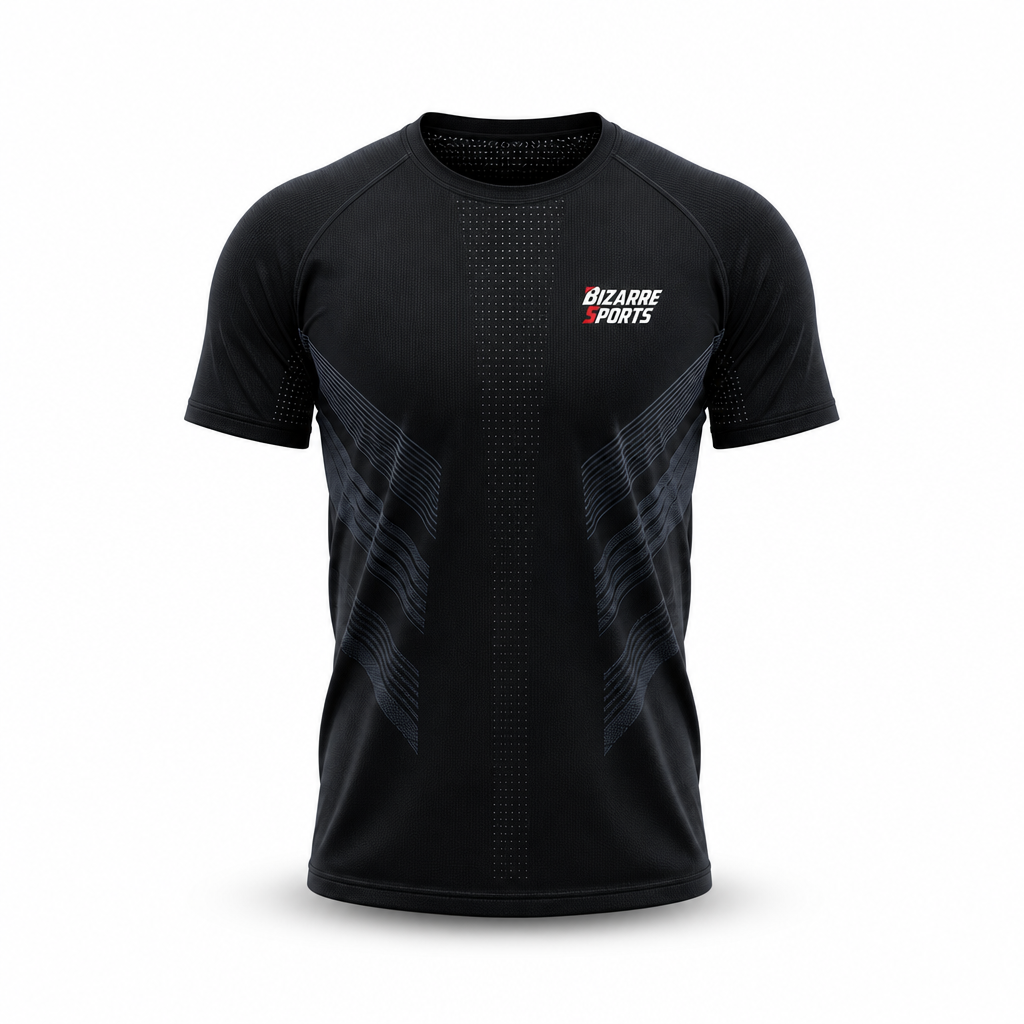
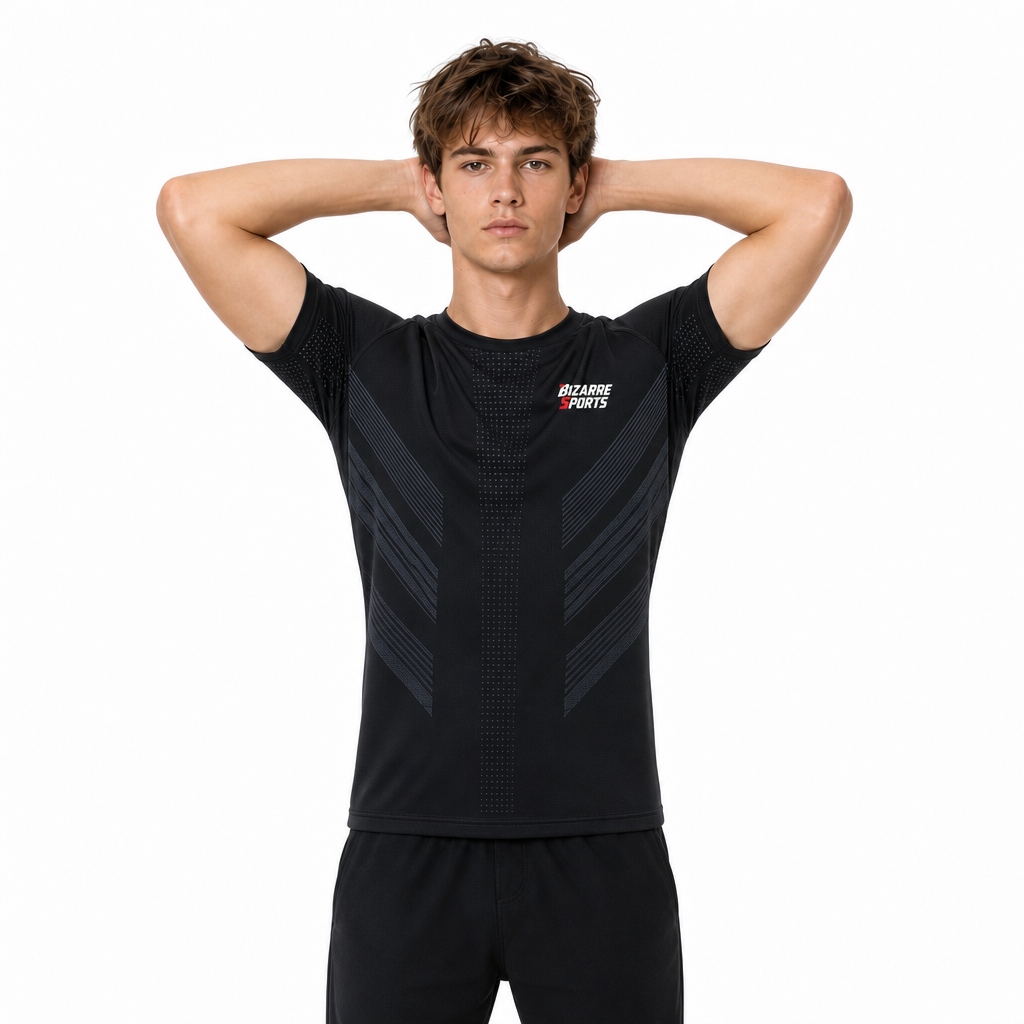
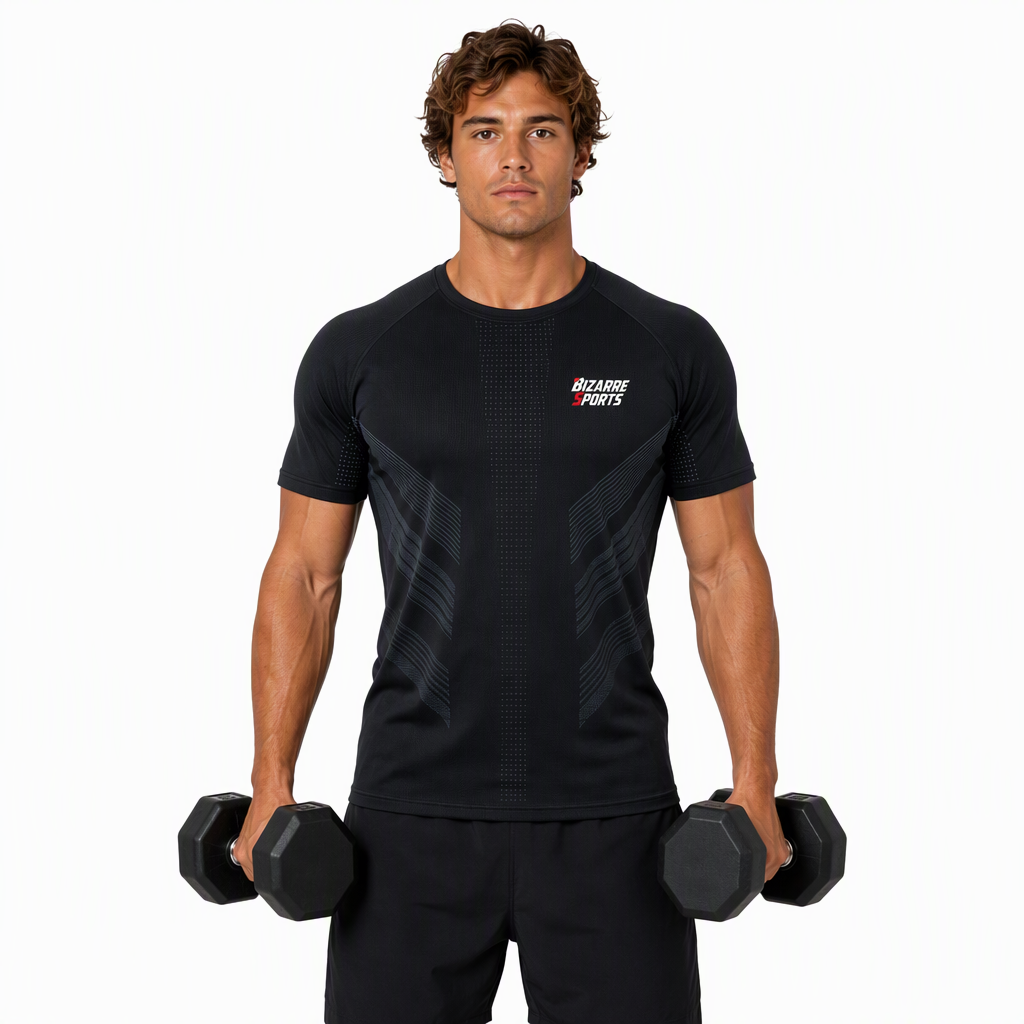
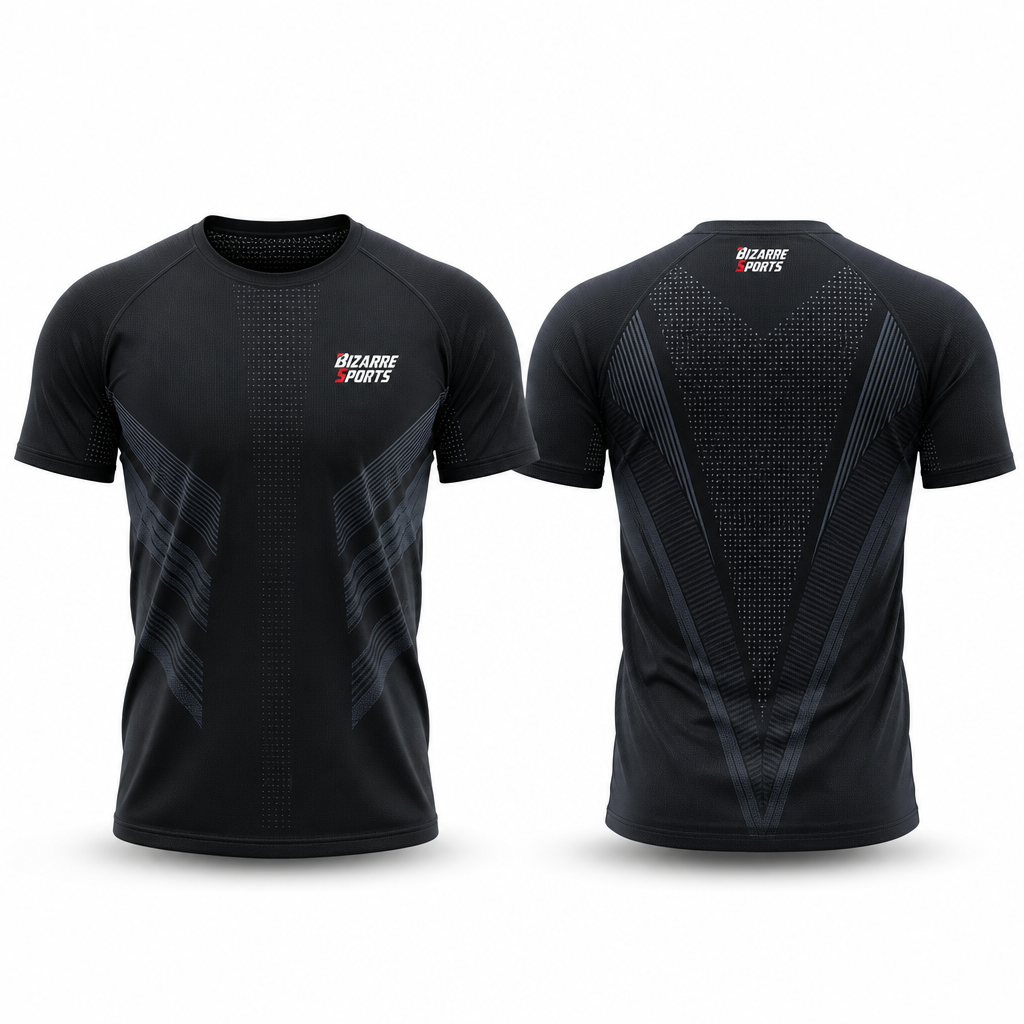
Wholesale Performance Short-Sleeve Training T-Shirt with Ventilation Mesh Zones and OEM Private Label Service Programme
- Product Type: Men's seamless short sleeve training t-shirt
- Fabric: Seamless knit, 140-160 gsm micro mesh base
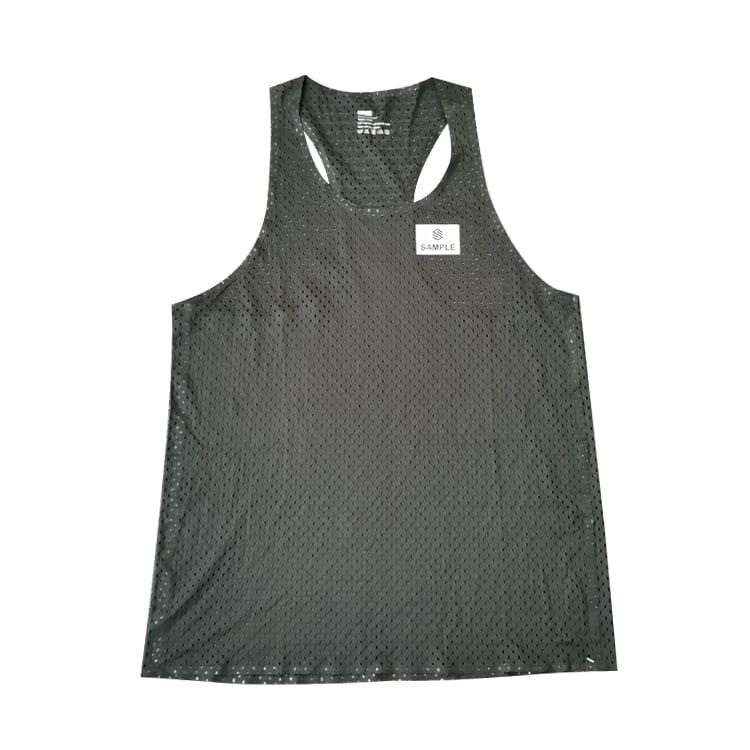
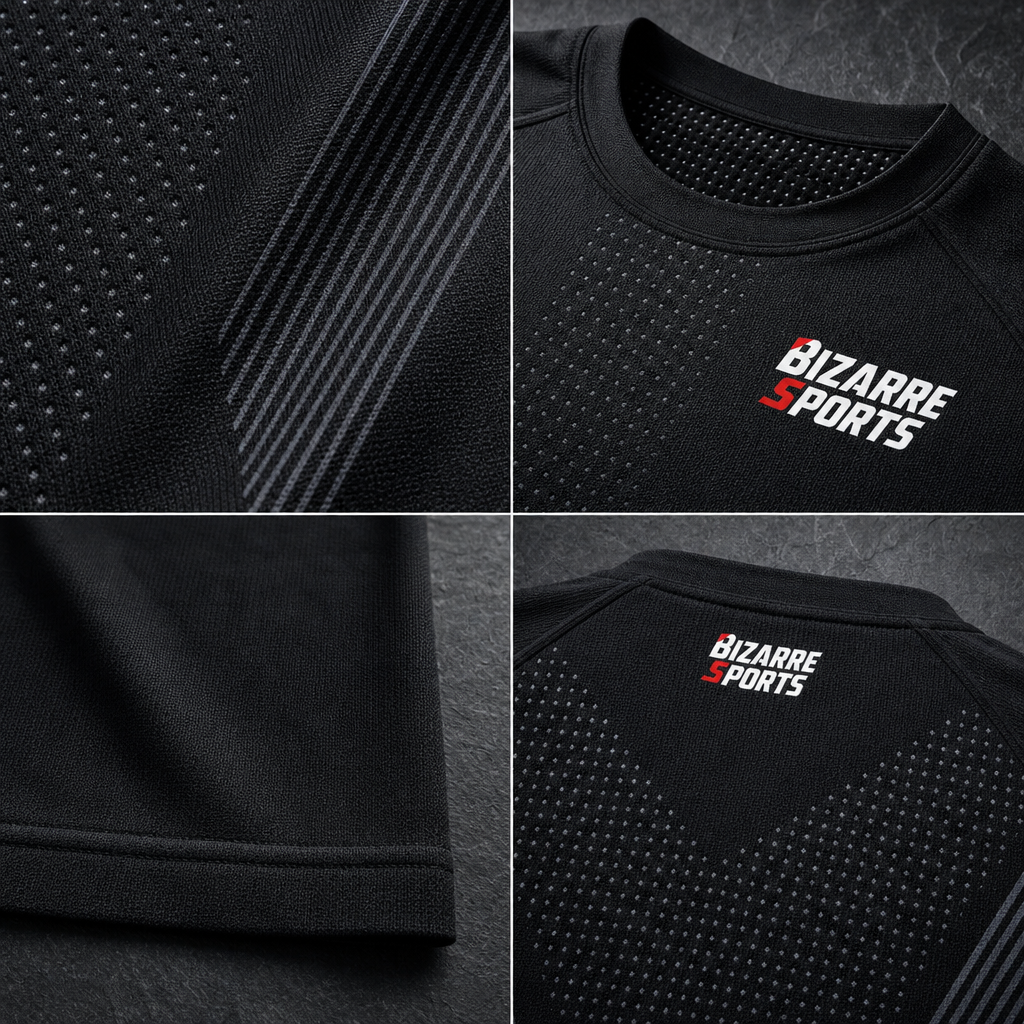
- Ventilation: Open knit zones at front centre and upper back
- Panels: Chevron side panels, knit change rather than print
- Sleeve: Raglan, no shoulder seam
- Trim: Bound crew neck, bonded hem
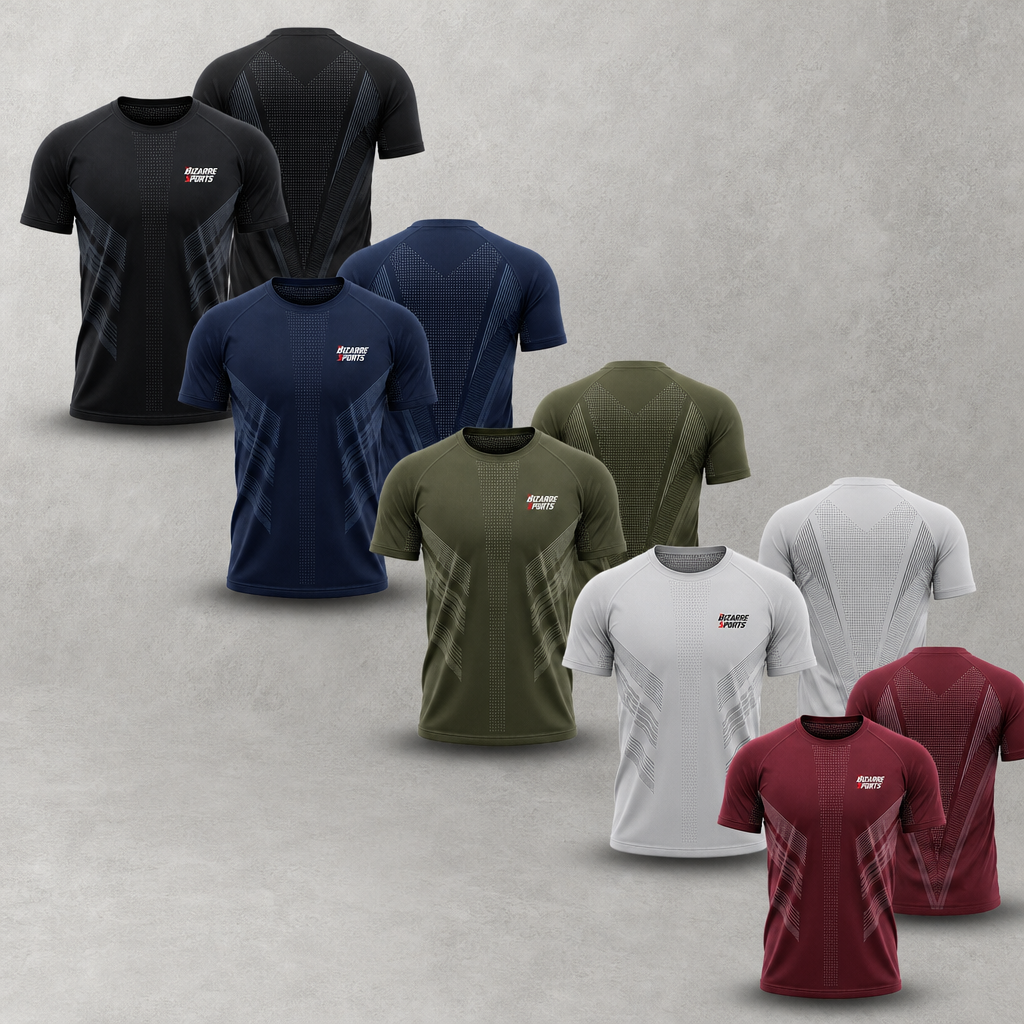
- Colour: Black; custom colourways available
- Sizes: XS–XL reference; wider range on request
- MOQ: Confirmed per project — it depends on construction, fabric, decoration and order mix. Contact us to discuss
- Customisation: Base colour, vent zone placement, chevron width, sleeve length, print method, logo placement, labelling, packaging
- Scope: Top only unless a set is quoted
A seamless short sleeve training t shirt with open knit vent zones at the front centre and upper back, built for club kit.
- Parameter
- Size Guide
- Service Assurance
- Why Choose Bizarre Sports
- FAQ
- Related products
Parameter
Vent Zones Where the Body Actually Heats
A training shirt fails at the back before it fails anywhere else, because the back sits flat against the fabric while the body pushes heat into it. This one carries open knit zones across the front centre and the upper back, which are the two areas that hold warmth under load. On a ventilation mesh shirt, placing those zones correctly matters more than how much mesh is used.
Chevron Side Panels, Cut Not Printed
The side panels run in a chevron shape away from the underarm, where a shirt collects moisture during a hard session. The panel is a change of knit rather than a printed stripe, so the airflow is real instead of graphic. That is the difference between a garment that vents and one that advertises venting.
Raglan Sleeves in a Seamless Knit
The sleeve runs from the neckline to the underarm with no shoulder seam, which is what allows the arm to travel overhead without the garment pulling across the chest. In a seamless construction there is nothing to press against the shoulder, so a raglan athletic tee reads as one surface rather than a joined sleeve.
Crew Neck With a Clean Binding
The neckline is bound rather than taped, so it sits flat and does not ripple after washing. A training t shirt gets pulled at the collar more than any other part, so that edge is the first thing to look tired on a cheaper garment. Check the binding tension on a sample rather than the neck width alone.
Bonded Hem and a Clean Finish
The hem is bonded, which means no stitching interruptions along the lower edge and nothing to rub at the waistband line. On a short sleeve gym shirt worn tucked or untucked, that finish is why the piece looks the same after twenty washes as it did in the sample room.
A Private Label Base, Not a Hero Product
This is sold as private label sportswear rather than a single retail piece: one block, one knit, one venting layout, and your choice of colour, mark and label. OEM athletic tee programmes use it because a fixed block across a range keeps the fit consistent between colourways, which is the part buyers get wrong when they source from several suppliers.
Where It Sells
Gym floors, club training, school sport and corporate activewear all suit this piece. For a club, it is the shirt that carries a small chest mark without looking like a promotional item. For a brand, it is the base layer of an athletic range that can be reordered without a new pattern.
Customise the Zones and the Mark
Base colour, vent zone placement, chevron panel width, sleeve length, print method, logo placement, labelling and packaging are open to your brief. If you are building a range of performance training t shirt pieces, we keep the block and the venting layout fixed so every colourway performs the same.
Sizing a Seamless Training Fit
The reference table lists the available sizes. A seamless knit has no side seam to give, so the size block matters more than on a stitched shirt. Confirm the size set on a wearer in motion, and check the neckline, the underarm and the vent zone edge rather than the chest measurement alone.
Sample First, Then Bulk
We would rather send a sample than argue about a bulk order. Train in it, wash it three times, and check the bound neckline, the bonded hem and whether the vent zones have stretched. If the edge has gone wavy or the mesh has lost its opening, we change the knit before the bulk run.
How to Get a Quote
We do not publish a fixed price, and we do not publish a fixed minimum, because both depend on the knit, the venting layout, the print method, the colour count and the size mix. Send your artwork, colour direction, quantities per size and target date, and contact us to discuss what works for your order.
How an OEM Programme Actually Runs
An OEM athletic tee order starts with three decisions: the knit, the venting layout and the mark. Once those are fixed, colour and size split follow. That order matters, because changing the vent layout after the knit is approved means a new sample rather than a new colourway.
For a performance training t shirt programme running across several clubs, we keep one block and vary only the colour and the chest mark. A ventilation mesh shirt produced that way stays consistent between orders, which is what a kit manager needs when a squad changes size mid season.
A private label sportswear range also depends on the label and the packaging being settled early. A short sleeve gym shirt with the right garment and the wrong neck label still reads as a sample. Send the label artwork with the first brief and we will confirm both on the pre-production piece.
A Note on Colour Depth
Dark grounds hide a seam and a mark; pale grounds show both. For a performance training t shirt in white or light grey, we check the vent zone edge and the chest mark on a strike-off before cutting, because a short sleeve gym shirt that reads clean in charcoal can look uneven in chalk.
If your range runs both a dark and a pale colourway, order the sample in the pale one. That is the piece that will find the fault in an OEM athletic tee build, and it is cheaper to find it before the run than after.
Size Guide
Is the Mesh Vent an Actual Hole?
No. The vent zones are a change in knit structure, not cut holes. That means the edges cannot fray and the airflow comes from the construction rather than from a perforation.
Can I Put My Own Label In?
Yes, that is the point of the private label programme. Send the label artwork and the placement you want, and we will confirm it on the pre-production sample. Neck labels, waist marks and packaging are all scoped per project.
Can the Vent Zones Move?
Yes, within the knit program. Moving the front centre zone up or the back zone wider is a small change; adding a third zone changes the knit and is quoted separately.
Service Assurance
We focus on custom OEM teamwear for clubs, schools, academies, leagues and brand buyers. You bring the colour direction, artwork, roster and measurement requirements; we turn them into one project brief and flag the details that will not hold on the fabric before sampling. Colour, artwork, size reference and visible inspection points sit in the same document, so your team reviews the right things before bulk planning rather than after.
Why Choose Bizarre Sports
Every order follows a sample confirmation step, a pre-production sample for approval and a final inspection before carton sealing. Price, MOQ, lead time, payment, delivery, packaging and defect handling are scoped to each enquiry and the approved project terms. Unconfirmed colour options, size ranges and packaging details stay out of the public promise. Replacement or refund is honoured for manufacturing defects verified on receipt.
FAQ
Size Guide
A seamless knit has no side seam to give, so the size block matters more than it does on a stitched shirt. Measure the chest flat and the body length from the high point of the shoulder, and compare against a shirt the wearer already trains in.
Check three points on the body: the bound neckline, the underarm, and the edge of the vent zone. A neckline that sits tight reads as a collar fault even when the chest fits, and a vent edge that pulls will crack before the garment wears out.
If a wearer sits between sizes, take the larger one for a training shirt. A seamless performance fit that is too small restricts the arm before the body notices.