 EN
EN


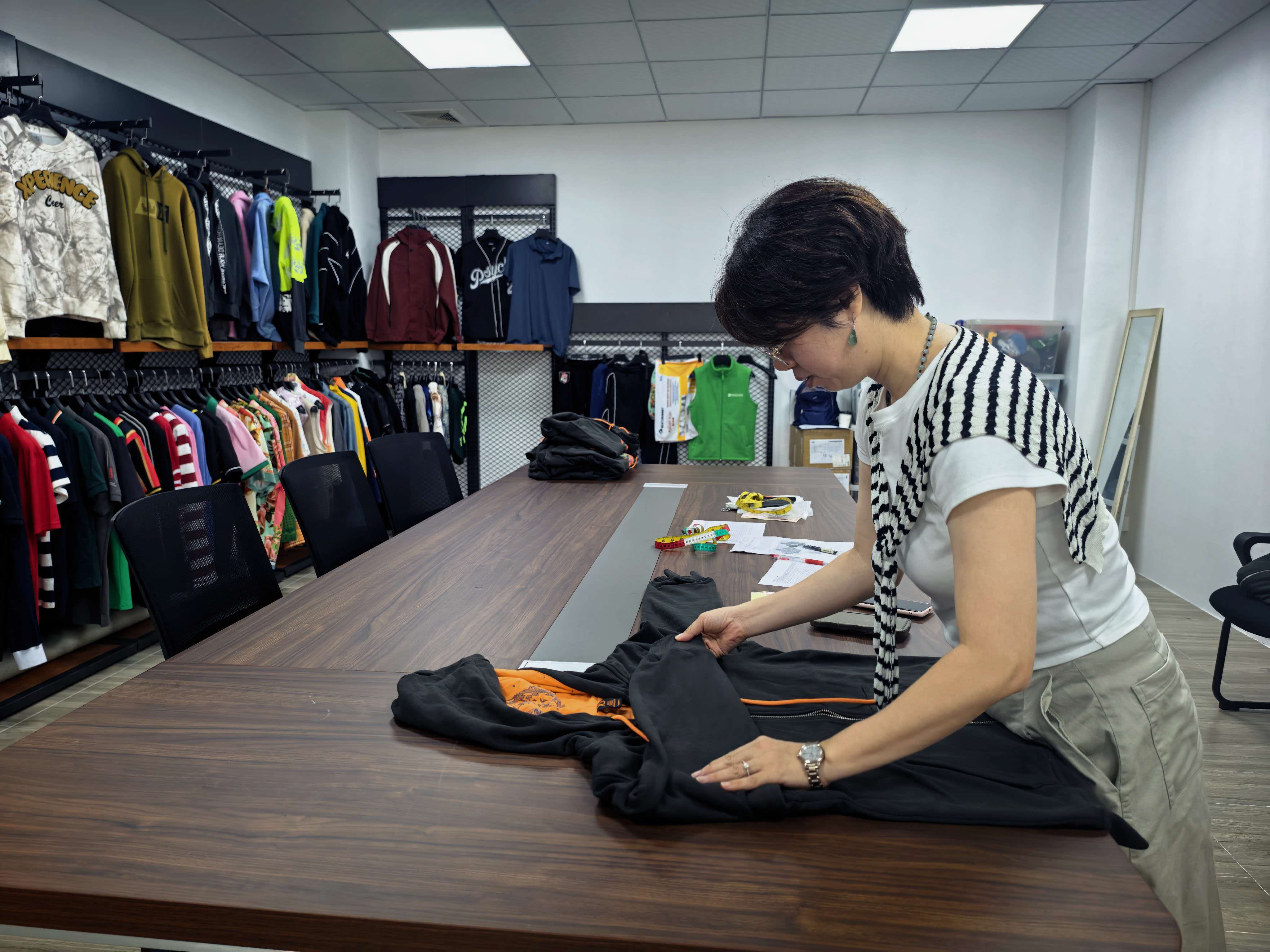
Our In-House Quality Control Process: How We Check Every Custom Apparel Order Before Pack-Out
After sewing and before pack-out, every custom apparel order we ship goes through our in-house quality control line. This is the step that decides whether a finished garment leaves the factory in the condition the buyer expected — and it is part of every project we run, from a small team kit to a full brand order.
This page walks through the four stages of our QC line, what we look for at each stage, and how a buyer can arrange for a sample to run through the line before a bulk order ships.
Stage 1 — Per-Order Spec Sheet Review
Before any garment touches the QC table, our team opens the spec sheet for the order. The spec sheet carries the order details: fabric base, critical measurements by size, artwork version, customer-required QC points, and the reference sample shipped to the buyer.
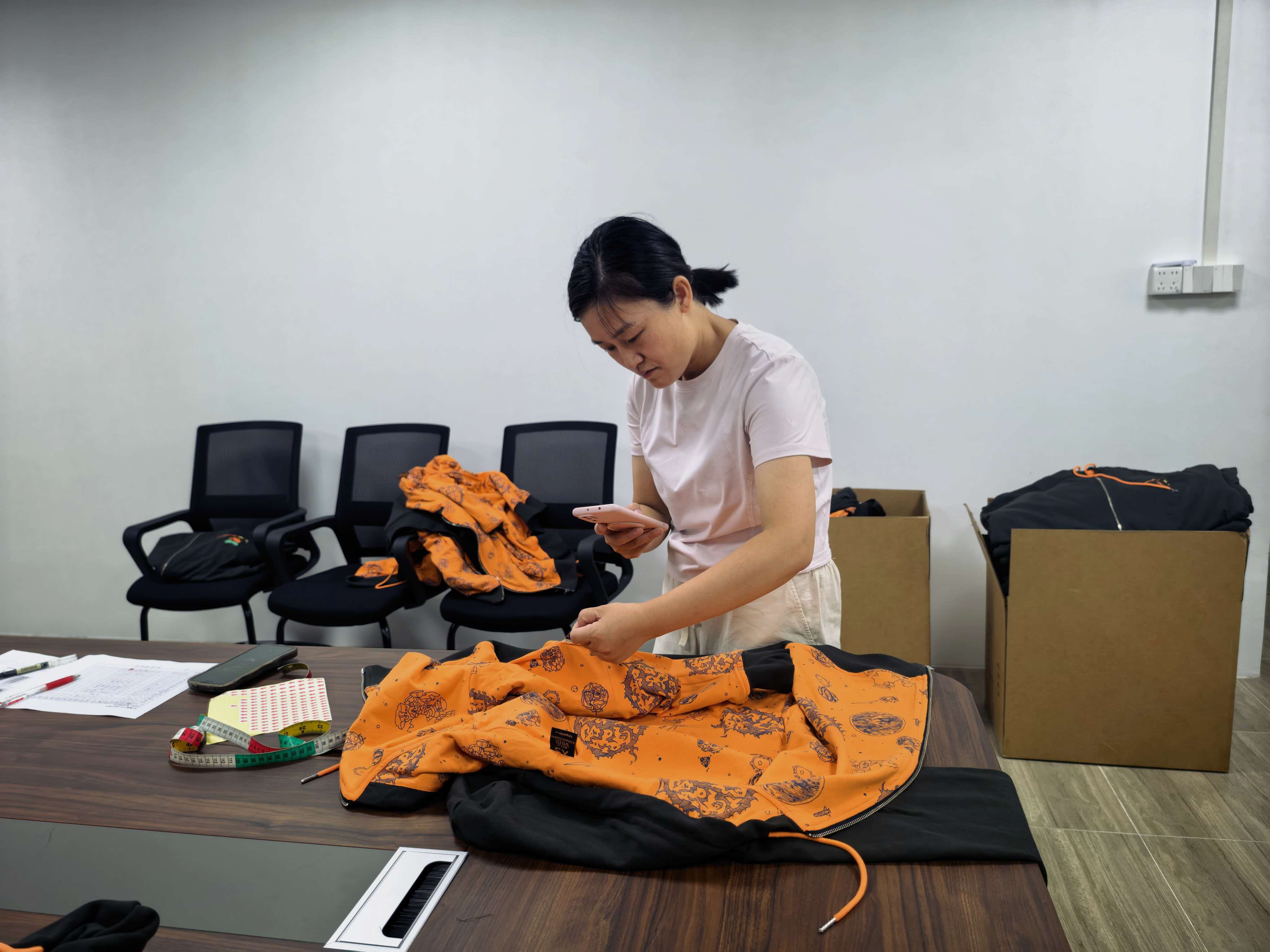
For our custom teamwear and basketball orders, this stage is non-negotiable. The QC table does not run without a spec sheet that matches the artwork, sample approval and order quantity. If the spec sheet changes mid-order — typical when a buyer tweaks a measurement or artwork detail — the QC table updates before the next garment is checked.
This stage is one of the reasons our repeat customers keep coming back: the QC table is not guessing, it is reading.
Stage 2 — Garment-by-Garment Visual Check
Once the spec sheet is on the table, the QC operator works through the order garment by garment. The visual check covers:
- Stitching consistency along seams, hems and binding
- Print or embroidery registration against the approved artwork
- Colour consistency within the order and against the colour standard
- Symmetry between left and right pieces (sleeves, leg panels, pockets)
- Trim and accessory placement (zipper pulls, drawstrings, woven labels)
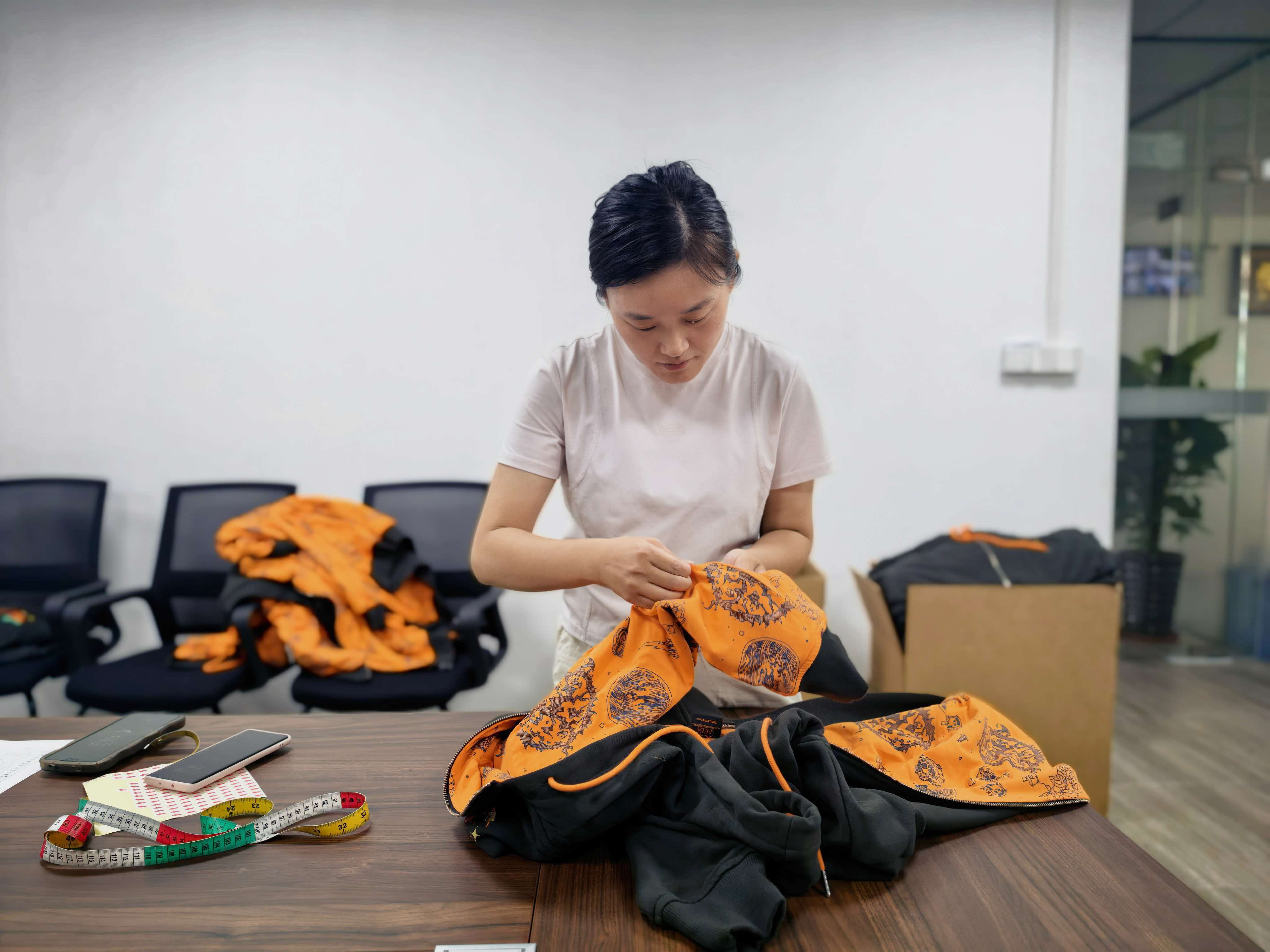
If a garment fails the visual check, it is set aside in a rework basket, not repacked. The rework garments go back to the relevant station — sewing, printing, embroidery — and return to the QC table for a second pass before they are allowed into the pack-out line.
Stage 3 — Measurement Verification
For every order, our QC table runs measurement verification against the spec sheet. The operator pulls a sample from each size, lays the garment flat, and records the critical dimensions on a per-batch measurement card.
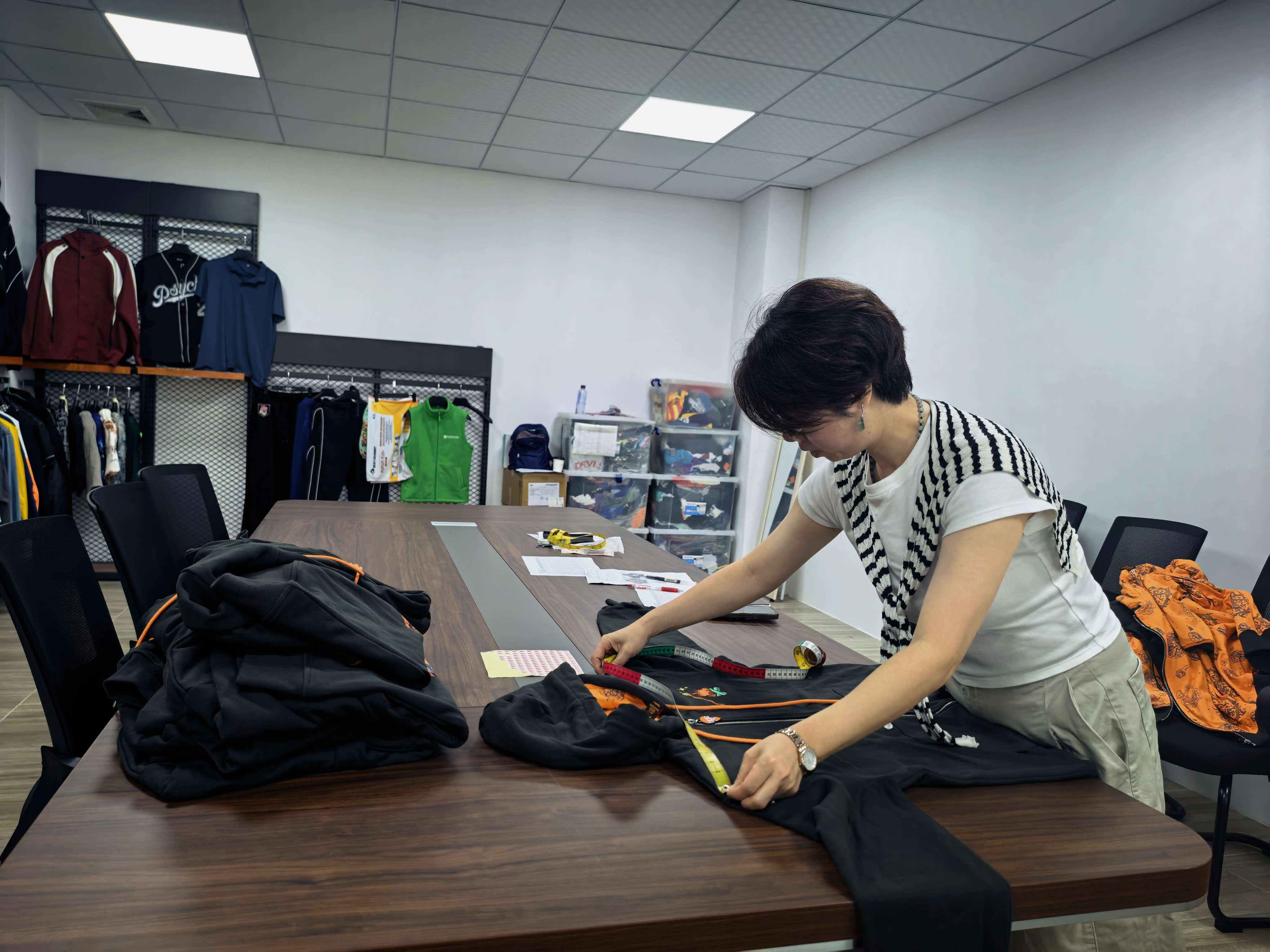
For a basketball kit, the critical dimensions typically include chest width, body length, sleeve length, armhole and hem. For a marathon singlet, the critical dimensions include body length, body width and neckline drop. For a branded hoodie, the critical dimensions include chest, body length, sleeve length and hood height.
Each measurement is recorded next to the spec value. If a garment falls outside the tolerance the buyer agreed to at sample approval, it is flagged for rework. The measurement card is saved with the order so it can be referenced at any time, including when the buyer comes back next season.
Stage 4 — Final Fold Before Pack-Out
The last stage on the line is the final fold before pack-out. The operator folds the garment to the format the buyer specified, counts pieces per polybag, and confirms the polybag count against the order. This is also the stage where the fold itself becomes a visual cue — a clean, consistent fold tells the buyer the project has been finished with care.
A garment that fails any earlier stage does not reach Stage 4. Stage 4 only handles garments that have already passed visual check and measurement verification. By the time a polybag is sealed, every garment inside has gone through the full line.
What the Buyer Sees
For every order, the buyer receives a small set of records alongside the shipment:
- Per-batch measurement card with critical dimensions by size
- QC pass / rework count summary
- Reference photos of the finished garment against the approved sample
These records are what we hand over so a buyer can verify our line ran the way we say it ran. If the buyer has a third-party inspection scheduled, we can also align our QC records with the inspection agency's requirements.
How This Connects to the Rest of Our Custom Apparel Production
Our QC line is the last thing that touches an order before pack-out, but it ties back to the rest of the line. If a quality problem shows up at QC, the feedback goes back to cutting, printing, embroidery or sewing so the next batch closes the gap. This is how our line improves order by order — and it is why a basketball kit that buyers reorder season after season still arrives in the same condition.
Start with a Sample
If you are planning a custom apparel or teamwear project and want to see how our QC line handles your spec, the simplest way to start is to send us your spec sheet, artwork idea and order quantity. We can run a sample through the full QC process and send it back with the measurement card, so you can see what the finished order will look how the records are kept.
Email: [email protected]
WhatsApp: +86 13995683615
Website: https://www.bizarresportswear.com/basketball
Table of Contents
- Our In-House Quality Control Process: How We Check Every Custom Apparel Order Before Pack-Out
- Stage 1 — Per-Order Spec Sheet Review
- Stage 2 — Garment-by-Garment Visual Check
- Stage 3 — Measurement Verification
- Stage 4 — Final Fold Before Pack-Out
- What the Buyer Sees
- How This Connects to the Rest of Our Custom Apparel Production
- Start with a Sample

