
Every apparel supplier hopes to win new customers.
But experienced buyers don't choose manufacturing partners because of impressive presentations or the lowest quotation.
They choose partners they can trust when production becomes complicated.
Several years ago, I experienced one of the most challenging supplier evaluations of my career. I travelled from Toronto to Montreal to meet one of the most respected figures in the global apparel industry—a man whose influence had shaped decades of apparel sourcing for some of the world's leading brands.
What happened during that meeting completely changed my understanding of what global buyers are really looking for when they evaluate a sportswear manufacturer.
If you're building a sportswear brand or searching for an OEM manufacturing partner, the lessons from that day may help you evaluate suppliers in a completely different way.
The office felt less like a meeting room and more like a museum of the apparel industry.
Photographs covering the walls documented decades of partnerships with internationally recognized brands. Every frame represented experience, reputation, and trust built over many years.
Behind the desk sat a man widely respected throughout the industry. This wasn't simply another customer meeting. It was a professional examination.
I had travelled from Toronto to Montreal after our initial meeting in Shanghai.
There was no presentation.
No marketing materials.
No company video.
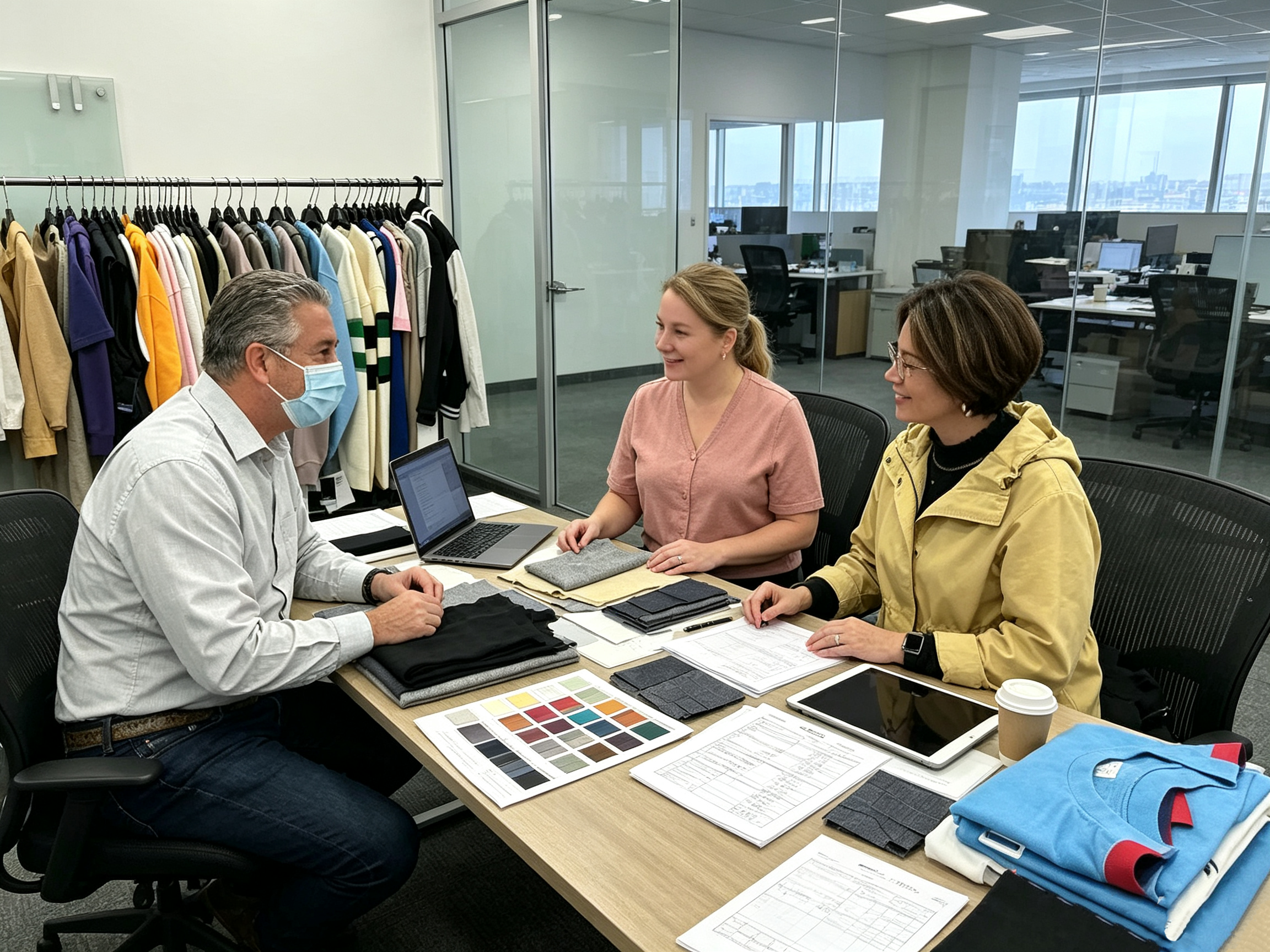
Instead, three experienced industry veterans began asking detailed questions about production management, quality control, delivery risks, and supplier responsibility.
The discussion moved naturally between English and French.
Fabric samples were placed on the table.
Questions came quickly.
There was little time to think.
Every answer mattered.
At first, I thought they were evaluating our factory.
Looking back, I realized they were evaluating something much more important.
Not our machines.
Not our production capacity.
Not even our prices.
They were evaluating how we think.
Experienced buyers already know that many factories can manufacture similar products.
What separates long-term partners from short-term suppliers is how they respond when production doesn't go exactly as planned.
That realization completely changed my approach to customer meetings.
Many suppliers assume price wins business.
Experienced buyers know otherwise.
One question kept returning throughout the discussion:
"What happens if you miss the delivery date?"
Notice what they weren't asking.
They didn't ask whether we were the cheapest supplier.
They wanted to understand whether we accepted responsibility when unexpected problems occurred.
That question revealed an important truth:
Price wins quotations.
Accountability wins partnerships.
After our first meeting in Shanghai, I reviewed every question carefully.
Instead of preparing a sales presentation, I prepared evidence.
I collected production lead times.
Quality inspection records.
Corrective action procedures.
Communication examples.
So when similar questions appeared again, I wasn't giving opinions.
I was demonstrating systems.
That's the difference between confidence and preparation.
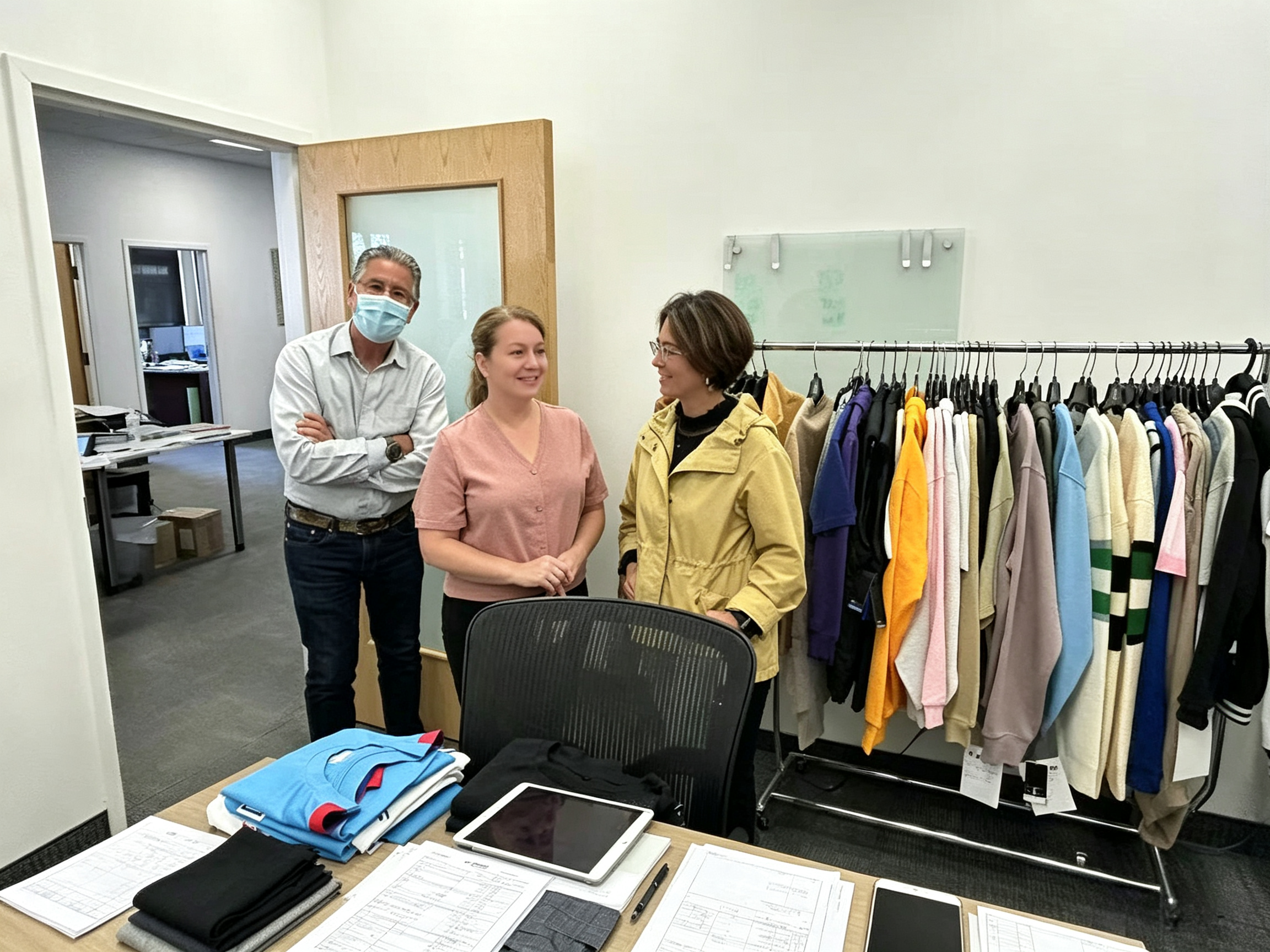
This customer had worked with countless suppliers across Asia.
Trying to become "the cheapest" would have been meaningless.
Instead, I focused on the things global brands value most:
Transparent communication
Flexible production planning
Reliable quality management
Fast problem-solving
These are the qualities that build long-term manufacturing relationships.
As conversations shifted between English and French, I paid attention to more than words.
I observed reactions.
I watched how samples were handled.
I noticed which questions generated discussion.
Experienced buyers communicate through details.
Sometimes the most valuable information is never spoken aloud.
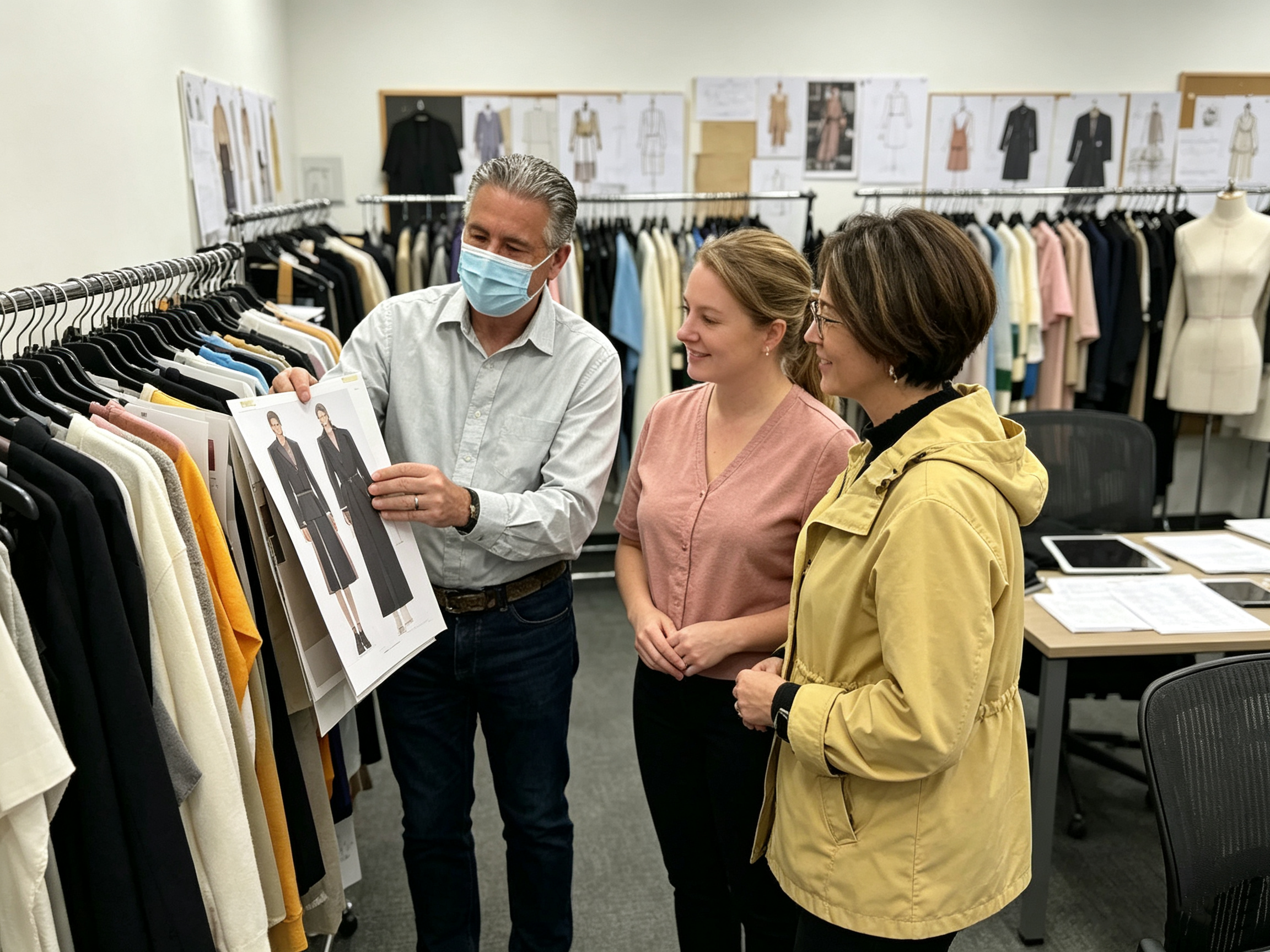
That meeting influenced the way we manage every customer project today.
Instead of simply manufacturing garments, we developed a communication process that keeps customers informed throughout production.
For every project, customers receive updates covering:
Because trust grows when information is shared—not hidden.
If you're selecting a custom sportswear manufacturer, don't focus only on quotations.
Ask questions such as:
The answers often reveal far more than the price list.
Looking back, I no longer remember every question that was asked during that meeting.
But I clearly remember the lesson it taught me.
The world's best manufacturing partnerships aren't built on perfect production.
They're built on transparency, accountability, and trust.
Those qualities begin long before the first purchase order is signed.
And they continue long after the products have been delivered.
In Part 2 of Cindy's Playbook, I'll share how that first challenging meeting eventually developed into a long-term partnership—and why consistency matters more than first impressions when working with global sportswear brands.


 EN
EN